This will be the last long-historical post.
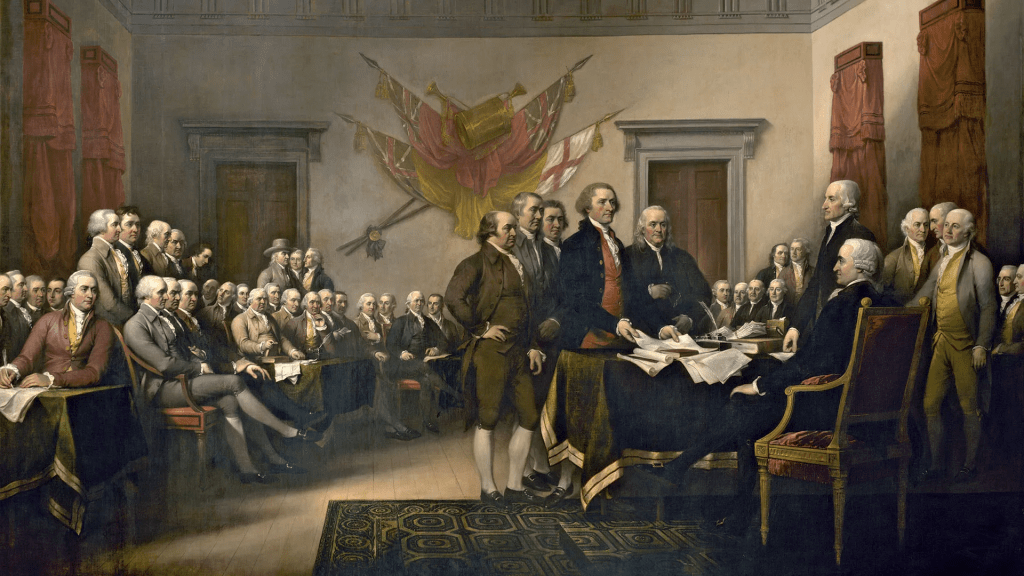
George Washingon: Did you know that 5 of our first 10 American presidents were of a different faith than Christianity and many of our “founding fathers” the same? It is important to go back and revisit this critical 105- year span, where the pendulum of reason was going to seed, and the headwaters of postmodernism were being formed.
Before I do, I want to make it clear that I am an armchair philosopher / historian. I am a subsistence thinker, studier, writer; I do it to save my own neck. Not as an act. If it had not been for the studying, I did in the 1990s–and it was intense research–I would have at least been an atheist or have killed myself. Suddenly the evangelical world I had known, no longer made sense.
The postmodernist Christian might lecture me at this juncture, “Mike you can’t know God through study, only by experience.” Then they would immediately return to their books and podcasts of their favorite postmodern guru to study their information. My point is that the idea of not using reason or study is only a linguistic illusion. Every moment of our lives is bathed in reason and study.
If you remember my historical perspective posting, I described how Plato had a huge impact on western culture and the Church for the first 1500 years. After that, the influence was divided between Plato in southern Europe and Aristotle in the north and in north America, both champions of reason. I also wrote about how culture swung back and forth like a pendulum, between a reason-centric society and an emotional driven society (often going by the name “spiritual”), each time going too far. We are at the end of an extreme “spiritual” emphasis in 2024, or at least I hope it is the end.
The placing of reason back into the highest story of the Platonic-dualistic dollhouse–the Renaissance 1440 -1680–was the mother of the Enlightenment 1685-1815. With the Enlightenment, reason was set free to dramatically change life in the west for the better and forever. People had once again put God’s gift of reason in its proper place, as the sole human instrument for finding knowledge and truth, the Gnostics long gone. The Church and king could no longer claim the bliss of ignorance for the masses, to control them. I could have stood up in almost any Christian church during this time and admit I am a Christian Rationalist, and no one would have batted an eye. No one would immediately tell my that my relationship with God is illegitimate. Not one. However, the years 1750-1855 were the crucial years where reason reached its zenith, then, like all pendulum swings, it went too far.
Isaac Newton (1643 – 1727): is one of my favorite people of history. Not only was he one of the smartest people who ever lived, even at age 24 inventing calculus while his school, while Trinity College at Cambridge was shut down during a plague outbreak. I started PA school at 24, trying to wrap my head around simple statistics. Newton was also a devout Christian, at least in his early life. There were many complex sides to the man, and he often applauded science and reason as being key to his relationship with God. With that I deeply relate.
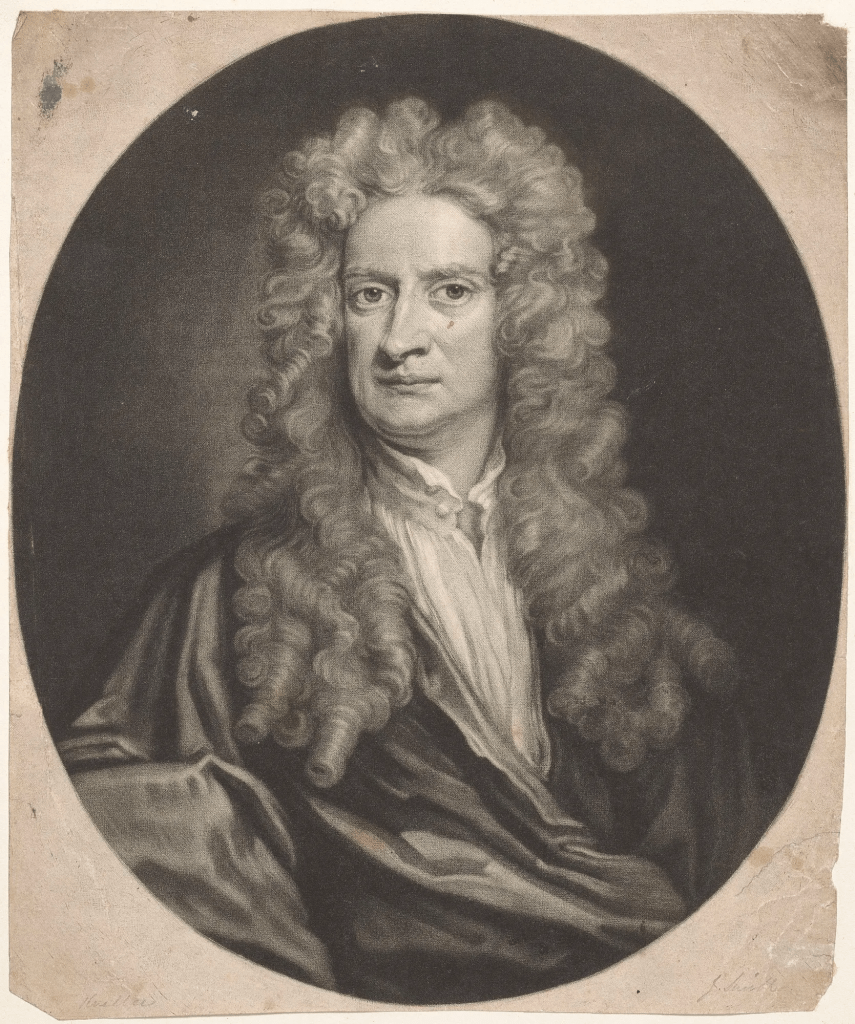
Newton, however, eventually had some unorthodox beliefs, more so toward the end of his life. It was after his death that it was revealed that he had become a deist. But many Christian intellectuals at the time were becoming deists including: Bengamin Franklin (1706 – 1790), George Washington (1732 – 1799), Thomas Jefferson (1743-1826), John Adams (1735 – 1826), James Madison (1751-1836), Thomas Paine (1771-1774) a real champion of deism, and John Tyler (1790-1862). Evangelicals like to teach a revisionists history, saying that these men were all fine evangelicals before the liberals destroyed America. But that’s another story.
So, what was going on during these 105 years that was eroding away orthodox Christianity into Christian deism, and finally deism? I believe it was the first symptoms of the reason pendulum having gone too far.
But first, what is deism? It is a broad spectrum of beliefs, different for one subscriber than another. However, its basic tenets are that God exist, however, after creating the cosmos, he applied the laws of nature (the ones that Newton so clearly measured and described) as his way of directing life. This was a closed system, meaning that God never interfered with his creation again. That eventually meant that Jesus could not have been God, that none of the miracles recorded in the Bible were true, that the resurrection never happened, and all of life would confined to the laws of nature and observable by science. This folks, was the real religion of many of our founding fathers.
I believe that reason had this impact on Christianity because it went outside of its lane. It was like the wonderful house guest, so kind and helping with the chores, who over-time, wears out her welcome and starts to meddle in your private affairs–uninvited.
I will try to keep this simple. Science is the field of knowledge about the cosmos. It thrives on the pursuit of truth and with that, I think God is delighted. The Church has been at odds with science at times because conformity is the agenda of the Church, not the pursuit of truth.
With that definition, science goes back thousands of years. Yet, during the Enlightenment, the “scientific method” was formed as an invaluable tool for using reason to make discoveries about the universe to advance this knowledge. The scientific method has a few basic parts with the goal of always ending in truth, 1) make a hypothesis, 2) removed all biases, 3) make observations, 4) collect measurable data, 5) analyze the data against probabilities to rule out chance, and 6) make a conclusion. Then it sets up a challenging peer-review, to judge that those steps have been properly taken. The problem arises with the unobservables, and what to do with them.
Many of the things that were unobservable during the Enlightenment are now observable, such as aspects of human behavior, brain function (via functional MRI), and atomic and subatomic particles and deep space. But some things, then and now, are beyond what scientific tools can measure.
Willy Wonka: In the areas of Christianity, some things are subject to the scientific method, including the critical examination of Bible texts (just like any ancient texts) and the corroboration of (recent) claimed miracles. I believe that even much of the nature of God is measurable by exploring the cosmos he as made, in the same way you can know a lot about Willy Wonka, by exploring his chocolate factory. That’s why I find it a paradox when religious people, who claim to be obsessed with God, have no interest in the science that explores that which God has intimately made.

One of the things that happened during the Enlightenment is that the previous superstitions of the Dark Ages, many of them religious, were proven false by scientific methods. This should not surprise anyone as the culture of Christianity and other religions put a huge value on miracles, and sensational stories as there is intense social coercion to claim them. I know this was true in my evangelical experience where I lied, and I am quite sure my fellow evangelicals lied about miracles on a routine basis. That is why I am very careful not to claim miracles today. This is typically another example that my critics use to prove I’m not a “spiritual person.” But I believe that God honors truth and honesty more than sensationalistic lies that appear to honor him . . . but I digress.
So, somewhere during this time, the notion that if something is not observable, it is not only of no interest to science, but not even real. In classical logic, this makes no sense metaphysically. Simply, something that isn’t measurable . . . isn’t measurable.
It was with this notion, the juncture where reason went over the line, this new science began to erode into Christianity, as the houseguest that over-stayed their welcome. The first symptom were the deists who adopted an objective form of Christianity, which matured in the next hundred years into atheism. After all, even God is not measurable within that concept, but the deists couldn’t go that far . . . at least not yet.
Søren Kierkegaard: The final chapter of this transitional story was the arrival of the philosopher / theologian Søren Kierkegaard (1813, – 1855). He, an on again, off again Christian theologian and philosopher made a sharp departure from the rationalism of the Enlightenment, I think because of reason’s eroding into the base of Christianity as I have described above. I don’t want to overblow Kierkegaard’s role in his development, but I would call him the grandfather of postmodernism, at least on the Christian side. Many other thinkers and writers have added to or shaped some of Kierkegaard’s thoughts. The postmodernist Christian speakers and authors often quote him as one of their theological heroes.
Soren was a complex writer and I’ve always found it hard to follow what he is saying. One student of Kierkegaard told me that Soren intended to write in obscure words and syntax to confuse the uneducated . . . like me. But his major departure from the Enlightenment, and solving this problem of unobservable Christian ideas, was to claim that there are two levels of truth, objective (observable) and subjective (unobservable). The subjective is higher than reason (Rob Bell calls it “transrational”). Sorry folks, but we must dig out the old two-story dollhouse once more. For it appears that Kierkegaard placed these two truths on a tier, the subjective most important, at least for the Christian. That subjective truth comes from our mere existence or experience in the world, thus the name “existential” for his new type of philosophical thought, of which Kierkegaard is called the “Father of.”
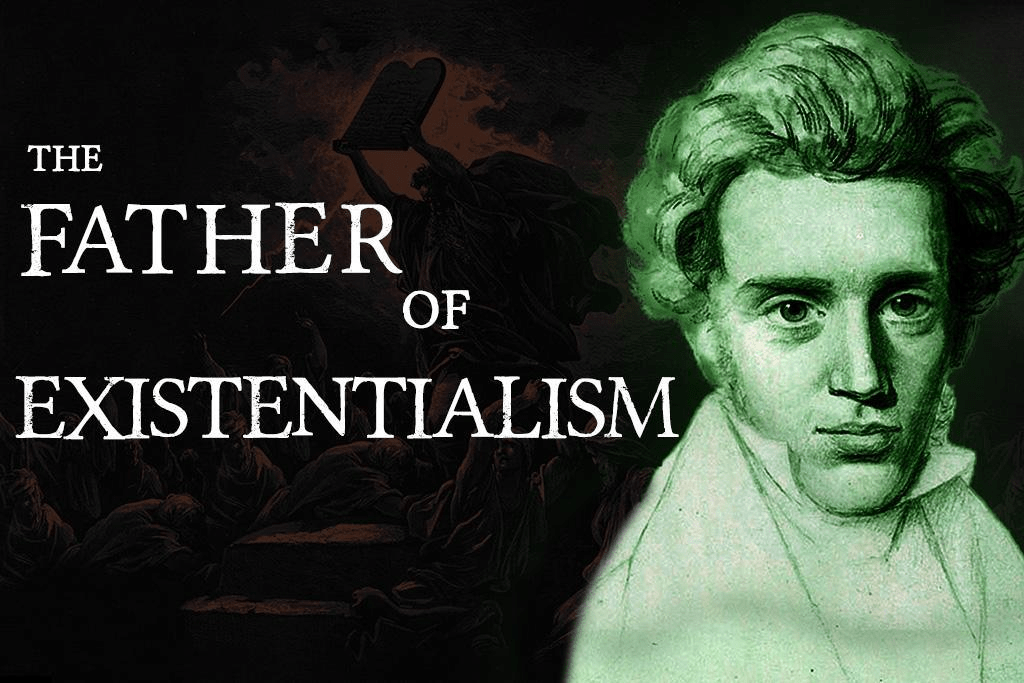
He also suggested that this higher truth is personal and therefore there are no universal truths, which, a century later, became the motto of postmodernism.
While this existential faith is the most popular today, there are real problems with it. I’m not writing to persuade others to think like me, so I will be brief with this point. The problems will always arise in the areas of morals and meaning. I gave an example recently of a Christian friend who told me that he molested his daughter and other girls. However, he defended his disgusting behavior because God has spoken to him in his heart (his subjective truth) that it was okay. There is no way to disagree with him, if you accept subjective truths that are not subject to reason. None. And that is just the beginning, as we will soon see. Without objective truth, racism is okay, as is murder, as lying about stolen elections, and etc. Morals fail when truth is personal.
Mike, Et al. My main point here, is that there is a history to why the American society, as a thinking fad, believes in subjective truth and rejects us who still hold to classical reason and universal truths. It is also inconsistent for someone to celebrate the subjective truth of the postmodernist Christian world, yet when we who believe in absolute (but not all knowable) truths and a good–but imperfect–reason dare speak of our views, they immediately shoot us down as having an inferior faith or relationship with God, to theirs. It sounds like their idea of personal truth suddenly becomes a universal truth, doesn’t it?
One more point that I want to make to try and create a corner at the table of the postmodern Christian world for the Christian Rationalist, is the lack of couristy of the postmodernist toward what we are saying. I am writing this paper to clarify what I believe, and I am thankful for those wo really want to know.
Almost without exception, when a well-meaning Christian challenges my relationship with God based on just the title, “Christian Rationalist” they are working from misconceptions. They see me as Spock (Star Trek) who is robotic, rejects all emotions, who sees a realationship with God as sterile, and impotent. I have no clue where they get that idea unless it is from watching Star Trek. I can guarentee that I’ve shed more tears in the past five years than almost anybodyI know. Day and night in tears within a profoundly intimate conversation with God, as I watch my life ending. Tears at touching dirt again when I thought I would never leave the hospital alive again. And tears of frustration when someone feels they must confront me, because my faith is all wrong. Incredibly painful. I am just fighting for mutal respect and to whack out a space in the jungle for other people like me, before they have no choice but to give up on Christianity altogether. It certainly feels like there is no place left within the walls of a Church for us anymore.
Mike


 Christianity Reimagined
Leave a comment