The linchpin to this whole discussion is epistemology, which is the study of how we find knowledge and truth.
The Historical Perspective on Epistemology: It was assumed by the pre-Christian thinkers that reason was the tool that we use to find knowledge about the world around us. The Greeks were the first to describe reason as a process related to mathematical logic. It was only within the religious groups has reason been challenged. As previously stated, the Christian Gnostics believed reason was not only a subordinate way for finding truth but was anti-God. They assumed that real truth came through a supernatural channel, directly from God into our souls.
The Neurophysiological Perspective: In the past fifty years, brain research has unveiled much better how we think and reason. The Greeks, speculated about the various parts of the brain based on the consequences of injuries to the head, especially in war. By the 19th century we knew much more, things learned during brain surgery and at autopsies. However, it was after the invention of the positron emission tomography (PET) brain scan in 1974, and functional MRI (fMRI) brain scans were invented, 1990, along with neuro-psych performance testing that research made leaps and bounds as noninvasive ways of understanding how the human brain works.
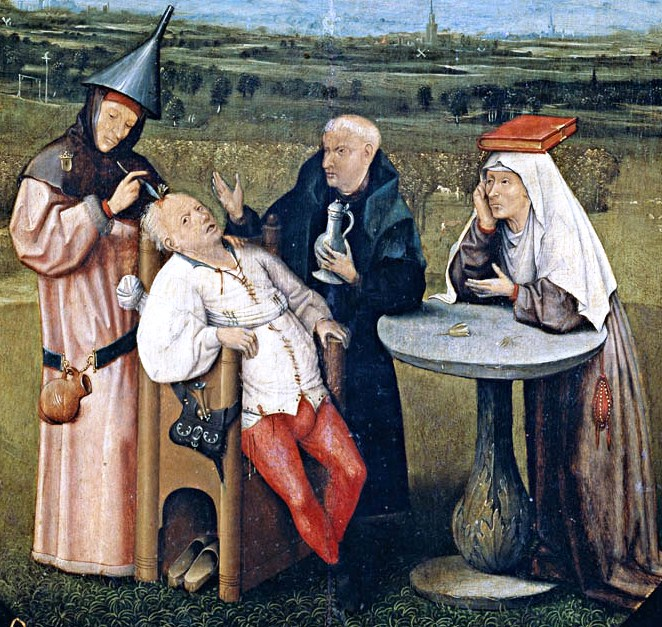
The brain is made up of several parts, synchronized in complex circuits. Part of the brain moves muscles (motor cortex), processes touch (sensory cortex), short- and long-term memory (temporal and frontal lobes), smell, taste (olfactory and insula), vision (occipital lobe), hearing and language (temporal and frontal lobes), emotions (limbic system), reason (prefrontal cortex) and personality (frontal cortex). This is an over-simplification. But we know precisely how the brain processes information and finds knowledge and truth. The brain has two over-riding systems for behavior, cognitive reasoning and emotions.
Our senses collect data about the outside world including the things we observe and what we learn through language. This information is processed with the help of memory (prior experience with the same data) and then enters a very mathematical or logical process that finalizes conclusions about that world using deductions from the evidence. Research has never discovered any way for finding information or truth besides this process. There were lots of claims of ESP (information that we gather without involving our senses or cognitive process or “extra sensory perception including religious processes) in the 1960s-80s. All those claims have been proven wrong.
It has always been part of our folklore where a mysterious intuition or just knowing something, is as good, if not better, than reason (as the Gnostics believed). However, there has never been evidence found for such a process. Reasoning is our only tool for finding truth about the world and our emotions dictate how we respond to those truths once found, fear, flight, pleasure, or joy.
Part of this folklore believes that intuition is a mysterious gift of knowledge without our senses or reason. It has been found that this intuition is a subliminal reasoning. For example, you have an intuition that you should not take highway 1 to work, and when you got to work, you heard that there was a back wreck on highway 1. However, you don’t think about the fact that highway 1 has several sharp curves and you had seen wrecks on highway 1 on rainy days, and it was raining hard that morning when you had the intuition not to take that highway. It is a completely rational process. Other claimed incidences are within the realm of probability.
Reason was juxtaposed, negatively, against faith for the first 1000 years of the Church. Europe entered the Dark Ages, while the rest of the world, such as the Muslim world, did not. The Renaissance liberated reason back to the healthy way God intended it to be. Wait a minute, am I saying that it was God who created this wonderful brain that runs on reason? However, starting with twentieth century, reason has been relegated back to an inferior or anti-God status by the Church. First it was the evangelicals who chose to believe things, such as a 6000-year-old earth, for which there is no evidence. The only way they can reconcile evidence less beliefs is to attack reason and science. Starting in the second half of the twentieth century, the progressive or postmodern end of the Church, following the claims of secular postmodernism, gave up on truth in general and reason as the process for finding truth, because if there is no truth about the cosmos, reason becomes superfluous.
To be clear, I as a Christian agree with the atheists on the point that reason is not perfect. We have errors in collecting sensory information. We have errors in the cognitive processing (as in many forms of mental illness) and one of the most common problems is that we resort to emotional reasoning rather than cognitive reasoning. I think all moral failures are related to emotional reasoning. All wars start with emotional reasoning, all murders, all affairs, all cruelty.
Religion has been one of the most prolific propagators of war because they deny that it is emotional reasoning and elevate it as from God as a spiritual cause. This is in spite of the historical Jesus being clearly a pacifist. The motivation of many Crusader knights of the Middle Ages wasn’t to claim lands for Christ, but Papal plenary indulgences (forgiving sins in advance) giving them the complete freedom to rape, murder, and steal without limits. Politics is of course another propagator of war, substituting “patriotism” as the emotional ideal.
I find the Neanderthals fascinating. They lived on earth for at least 350,000 years, the last ones (as far as we know) dying off about 40,000 years ago. You may not know that the Neanderthals had an average brain size of 1500 cc as compared to our average brain size of 1350 cc. However, the stone tools that they made, changed very little over this time.
However, as soon as homospiens arrived in Europe, about 50,000 years ago, not only did they replace the Neanderthals within 10,000 years, but they started to progress rapidly. This progression has crescendoed over time, for example going from the first air flight to landing on the moon within 60 years. What was the difference?
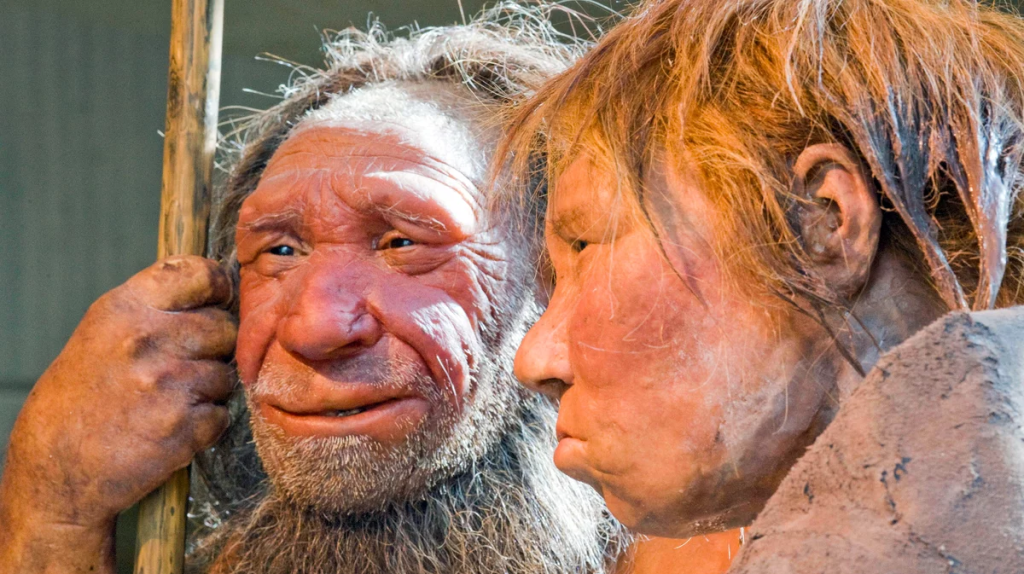
The difference was that the Neanderthals’ bigger brain had a significantly larger part devoted to processing vision. I would love to see the world they way that they did. This helped them to hunt and survive. However, the smaller brained homosapiens had different brain priorities, more area devoted to cognitive reasoning. Reason works because it is consistent with how God has made the cosmos.
My closing point is that reason, although like Augustine believed, is not perfect, but is the sole tool God has given us for finding knowledge and truth. Our study of scripture is a function of the cognitive process as is our religious devotion. A Christian Rationalist simply acknowledges this state of being.
Thanks for reading and your interest in the topic.
Mike


 Christianity Reimagined
Leave a reply to Here is a directory of my four-part series on “What is a Christian Rationalist?” – Christianity Reimagined Cancel reply